RV Slide Toppers: An Honest Take (Are They Worth the Upkeep?)

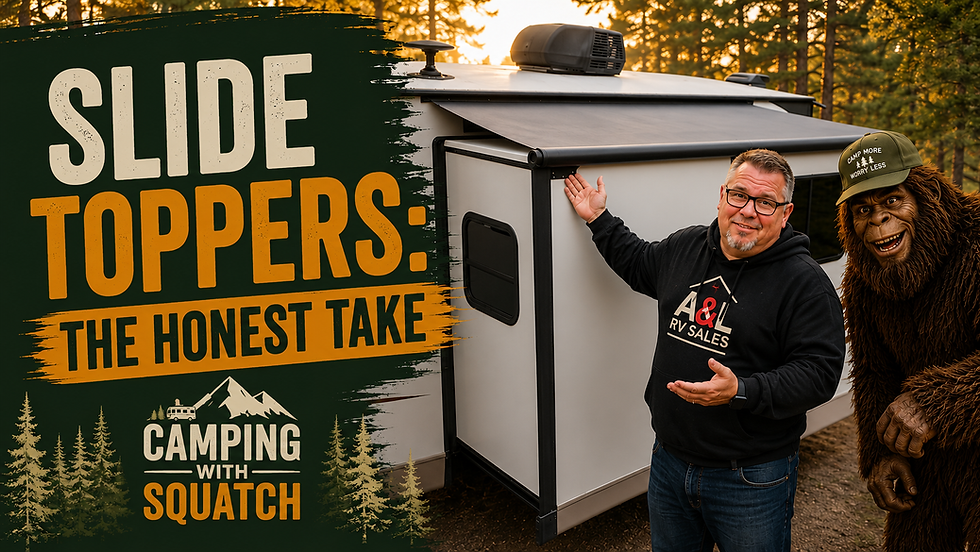
RV slide toppers are one of those features folks ask me about all the time, usually some version of: "Do I really need those, and are they a pain to keep up?" Fair question, and you're gonna get a straight answer from me — because the honest truth is they're genuinely great to have and they need a little upkeep nobody seems to mention at the sale. Both things are true. Let's talk about it.
I'm Joe — Squatch to most folks — and today on Camping with Squatch we're giving slide toppers the honest treatment: what they actually do for you, the maintenance reality, and whether they're worth it for the way you camp. No hype, no glossing over the downsides. Let's dig in.
First, What Is a Slide Topper?
A slide topper is basically a fabric awning that mounts above your slide-out. When your slide extends, the topper rolls out and covers the top of it; when the slide comes back in, the topper rolls itself back up on a spring-loaded tube. You don't crank it or push a button — it works automatically with the slide.
Its whole job is to cover the roof of your slide-out while it's extended, and that simple job does more good than you'd think.
What RV Slide Toppers Actually Do for You
Here's where they earn their keep:
They keep junk off your slide roof. Leaves, twigs, pine needles, acorns, dirt — all the stuff that rains down from trees lands on the topper instead of on the slide itself. Why does that matter? Because when you retract a slide that's covered in debris, all that gunk gets dragged inside against your seals (and sometimes into your rig). A topper keeps the slide roof clean so retracting it stays clean.
They shed water. Instead of rain pooling on top of your slide and finding its way past the seals, the topper channels it off the side. That's real leak protection.
They protect the slide from sun and weather. UV and the elements are hard on slide seals and roofs; the topper takes that beating instead.
Bonus: a little shade and less rain noise. Not the main point, but a nice perk.
So yeah — genuinely useful, especially if you camp under trees or anywhere wet and leafy. Now the part nobody mentions.
The Honest Part: They Need Maintenance
Here's the straight talk. A slide topper is a piece of fabric stretched out in the sun and weather, and that means it's not a "set it and forget it" feature. Over time you'll deal with some of this:
Sun wears the fabric out. UV slowly fades it and makes it brittle, and eventually the fabric will need replacing. That's a normal wear item, not a defect — but it's a cost down the road.
It can sag or lose spring tension. If your topper starts drooping or won't roll up tight, the tension in that spring tube may need adjusting. Heads up: that spring is under serious load, and adjusting it can be dangerous — this is usually a job for a pro or your dealer's service shop, not a Saturday DIY.
Wind is its enemy. A loose or worn topper will flap, billow, and can tear or even partially unroll in a strong gust. In heavy wind, the move is to bring your slide in so the topper isn't out there taking a beating.
Water and debris can pool. A sagging topper can collect standing water or a pile of leaves, and that weight stresses the fabric and breeds mildew stains.
It needs occasional cleaning. Dirt and mildew build up like on any outdoor fabric, so it wants a wash now and then (more on that below).
None of this is a dealbreaker — it's just the reality. Toppers trade a little upkeep for a lot of slide protection.
How to Take Care of Your Slide Toppers
Keeping them happy isn't hard:
Clean them a couple times a season. Use gentle soap and water and a soft brush, rinse well, and — importantly — let the fabric dry before you retract the slide, so you're not rolling up wet fabric that'll grow mildew. Skip harsh chemicals and bleach; they break the fabric down. (My [how to wash an RV] post covers gentle, fabric-safe cleaning.)
Inspect for damage. Look for small tears, holes, fraying, or thinning spots. Catch them early — a tiny tear is a cheap fix; a blown-out topper on the highway is not.
Knock off water and debris before retracting the slide, especially after a storm.
Bring the slide in for high wind and storms. Don't leave toppers (or slides) out to fight a gale.
Make sure it's rolled tight before you travel. You do not want a topper unrolling and whipping around at highway speed. Give it a glance on your pre-trip walk-around.
Don't let snow or ice pile up. That weight can damage the fabric and the hardware.
Get the spring tension adjusted by a pro if it starts sagging — don't fight that loaded spring yourself.
So… Are Slide Toppers Worth It?
Here's my honest verdict:
They're absolutely worth it if you camp or store your rig under trees, in wet or leafy areas, or outdoors in general. The protection they give your slide seals and roof — and the headache they save you every time you retract a clean slide instead of a debris-covered one — easily outweighs the upkeep.
They're less critical if you mostly camp in wide-open, dry spots and store your rig indoors or covered, where there's not much falling on your slides to begin with. You'd still get some benefit, but the case is weaker.
Either way, go in with clear eyes: they're a great feature that does ask for a little maintenance and will eventually need the fabric replaced. That's not a knock — it's just the honest trade. And in my book, for most folks camping in the real world with actual trees, that trade is well worth it.
Squatch Tips: Getting the Most From Your Slide Toppers
Here's what I tell folks:
Dry before you retract. The single easiest way to prevent mildew is to never roll up a wet topper. Let it dry.
When the wind kicks up, bring the slide in. Most topper damage I see is wind damage that a quick slide retraction would've prevented.
Glance at them on your pre-trip walk-around. Make sure they're rolled tight before you hit the road — a highway unroll is an expensive, scary mess.
Fix small tears fast. Fabric repair tape or a quick patch on a little tear can buy you a lot of life. Ignore it and the wind finishes the job.
Leave the spring tension to the pros. That tube is under heavy load. Sagging topper? Let a service tech handle it safely.
That's the heart of Camping with Squatch — telling you the upside and the upkeep, so you know exactly what you're getting into and can enjoy the feature without the surprise.
Print This: Slide Topper Care Checklist
Tape it inside a cabinet.
Routine Care
[ ] Clean a couple times a season (gentle soap, soft brush, rinse)
[ ] Always let the fabric DRY before retracting
[ ] No harsh chemicals or bleach on the fabric
[ ] Inspect for tears, holes, fraying, thinning
Out at the Campsite
[ ] Knock off pooled water and debris before retracting
[ ] Bring the slide IN for high wind / storms
[ ] Don't let snow or ice build up
Before You Travel
[ ] Confirm topper is rolled up tight (check on your walk-around)
When Something's Off
[ ] Patch small tears early
[ ] Sagging or loose? Have a pro adjust the spring tension (don't DIY)
[ ] Worn-out fabric? Plan to replace it before it fails
The Bottom Line
Slide toppers are a genuinely great feature that protects one of the more vulnerable parts of your rig — as long as you go in knowing they need a little love and won't last forever. Keep them clean and dry, respect the wind, check them before you roll, and they'll pay you back with cleaner slides and better-protected seals for years.
And if you're shopping for a rig and wondering whether the slide toppers are in good shape — or whether a unit even has them — come find me at A&L RV Sales in Christiana, just outside Murfreesboro. Give me a call or text at 615-653-7561, or follow along with Camping with Squatch for more honest, no-hype straight talk. No pressure, ever — I just want you camping happy.


Comments